

Amazon Prime Day 2026: The Discount War Is Over.
What really drives sales, rankings, and ad performance during Prime Day? The latest AMVisor research analyzed Prime Day 2026 performance across European and U.S. marketplaces and found a clear pattern: the most successful brands weren't necessarily the ones offering the biggest discounts. Explore the insights below and download the full report to see what separated the winners from the rest.
The brands that won Prime Day 2026 weren’t the ones cutting prices the hardest. They were the ones that showed up ready.
For years, the Prime Day playbook felt settled. Secure the deals, turn up the promotional pressure, and hope the event carried the rest. Bigger discounts, bigger results. Prime Day 2026 quietly retired that assumption.
When we analyzed thousands of products across European and U.S. marketplaces, one pattern refused to fit the old logic: the brands that performed best were rarely the ones offering the deepest discounts. Winning came from being prepared on several fronts at once — visibility, pricing, advertising, and operational readiness all mattered far more than the size of a price cut.
Your Content Goes Here
Everyone shows up now. Almost nobody is visible.
A single figure captures how much the event has matured: 100% of the vendors we analyzed took part in Prime Day 2026. A year ago, some brands were still debating whether it was worth the effort. That debate is finished — participation is now the baseline, not the edge.
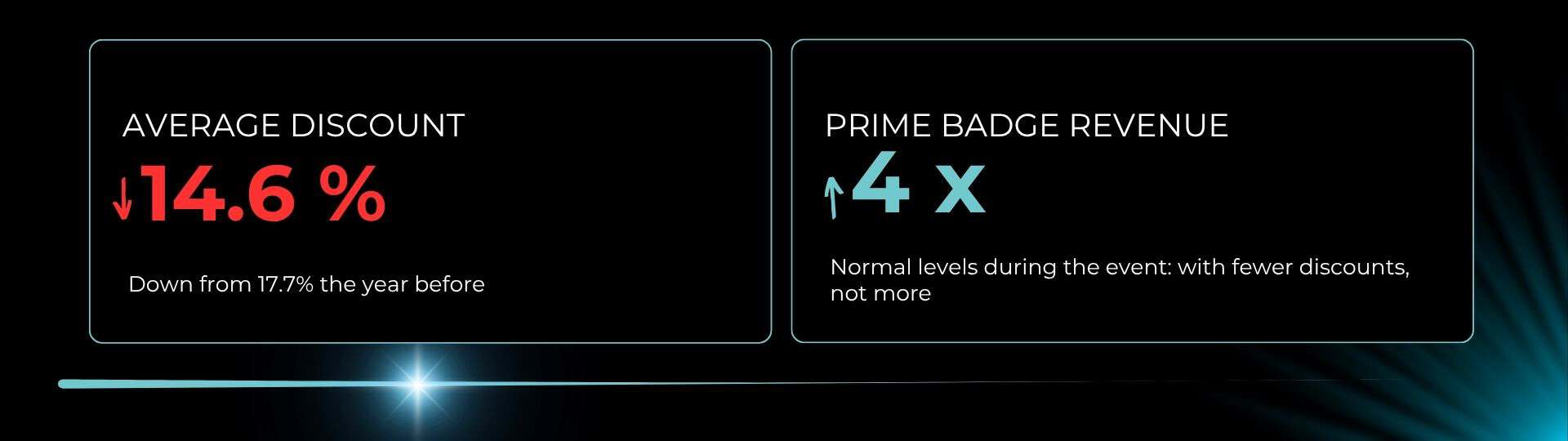
What stays scarce is visibility. Even with everyone participating, only 18.2% of active assortment products carried a Prime badge during the event. The strategic question has moved on. It’s no longer whether to participate — it’s which products deserve the limited visibility Amazon rewards.
And that choice pays off well beyond the four days. Prime badge products didn’t just spike during the event; they carried the momentum afterward through stronger Bestseller Rank improvements. Prime Day has become a lever for long-term shelf visibility, not a short-term sales blip.
“What we see in practice is not a lack of data or even a lack of analysis. The real challenge is turning answers into decisions you can actually trust. That’s where structure becomes critical.”My opinion on >> LinkedIn

The era of blanket discounting is ending.
Here’s the finding that surprised us most: average discounts actually fell. Prime discounts dropped from 17.7% to 14.6% — and the event was every bit as competitive as before.
Look closer and it makes sense. Leading brands are getting selective. Instead of discounting broad swathes of the portfolio, they invest deliberately: some products protected for margin, others activated to maximize visibility and volume, a few used strategically to clear inventory.
The question in mature vendor teams has shifted from “How much discount do we need?” to “Where should we invest our promotional budget for the greatest business impact?” That’s a far sharper question — and a much more profitable one.
Advertising has become the price of visibility.
If there was ever a moment when brands could ride organic Prime Day traffic for free, it’s gone. Advertising spend climbed to 3.4× normal levels during the event, and efficiency got harder to hold as both ACoS and TACoS rose.
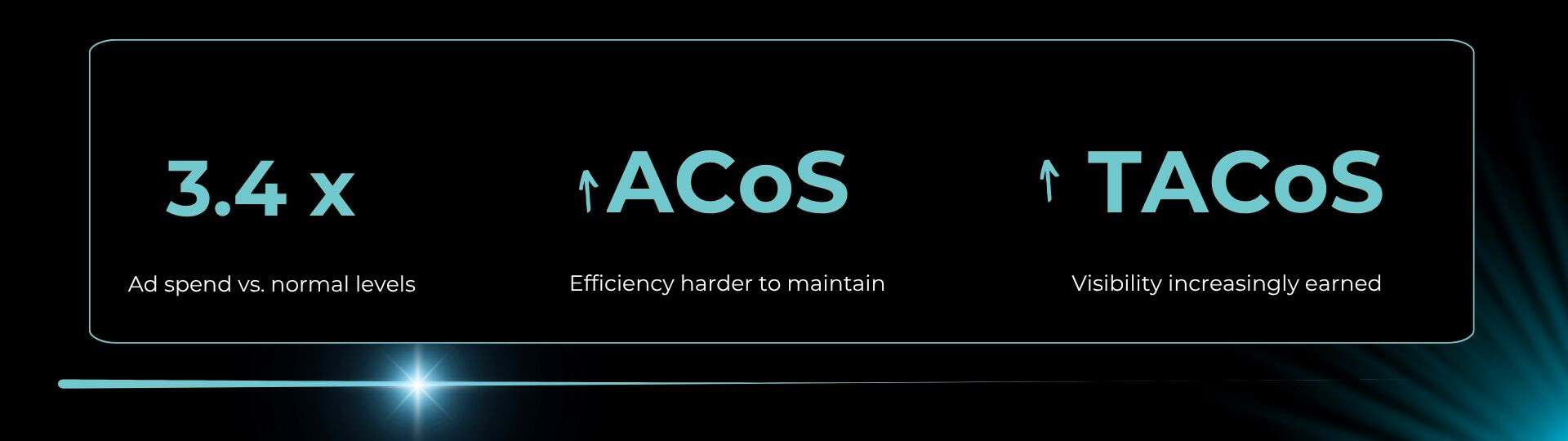
This isn’t just a story about rising costs — it reflects how Amazon now behaves during major events. Visibility is earned, not handed out. The brands that came through weren’t necessarily the biggest spenders. They arrived with clear campaign strategy, optimized structures, and the discipline to scale cleanly when demand surged. For most categories, advertising is no longer an enhancement to Prime Day. It’s the entry fee.
Day One matters more than the whole rest of the week.
Plenty of teams still treat Prime Day as a multi-day event they can steer as it unfolds. The data says otherwise. The sharpest revenue spikes hit the instant the event opened — Prime badge products reached up to 5.7× normal revenue on Day One alone. By Day Two, much of that surge had already passed.
Sometimes demand beats every strategy.
The most memorable story from the dataset had nothing to do with discounts, ads, or badges. One of the strongest performers of the entire event was a portable air conditioner in Germany.
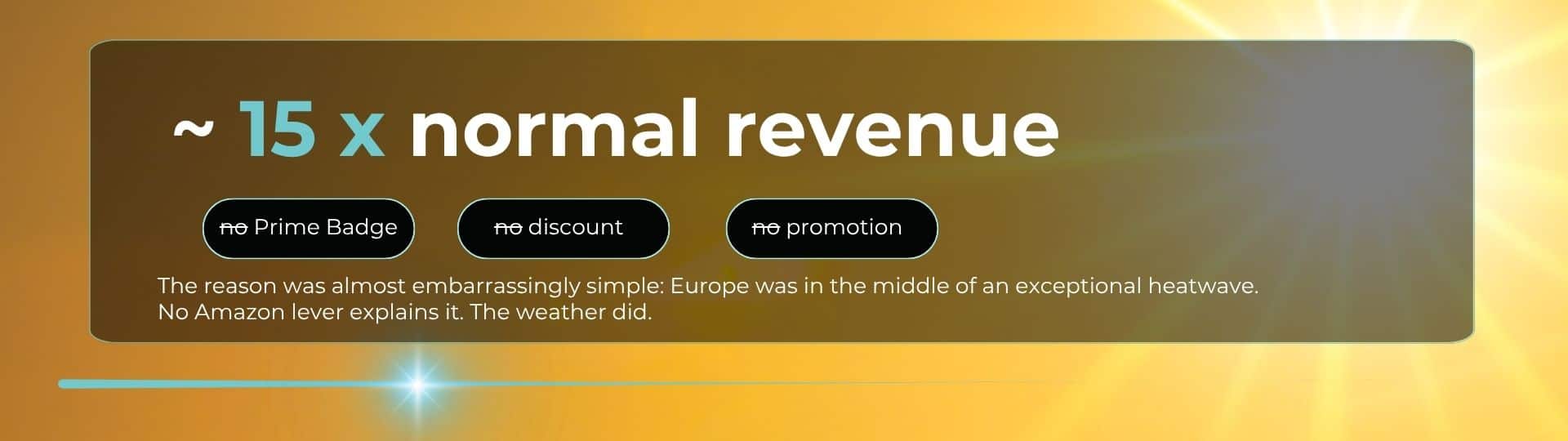
It’s a useful reminder that not every success factor lives inside Amazon. Consumer demand is shaped by weather, seasonality, cultural moments, and market conditions. Brands that read those forces can sometimes outperform without leaning on aggressive promotion at all. Strategy isn’t only about reacting to Amazon — it’s about understanding the environment Amazon operates in.
Conclusion
Prime Day 2026 marks a genuine transition. The event has become less about promotional intensity and more about organizational readiness. The best-performing brands didn’t win by discounting harder.
FAQs

Related Posts


Details that matter!
Details that matter!
Receive our exclusive insights, articles, and announcements in your inbox.


